Map the complete charging path
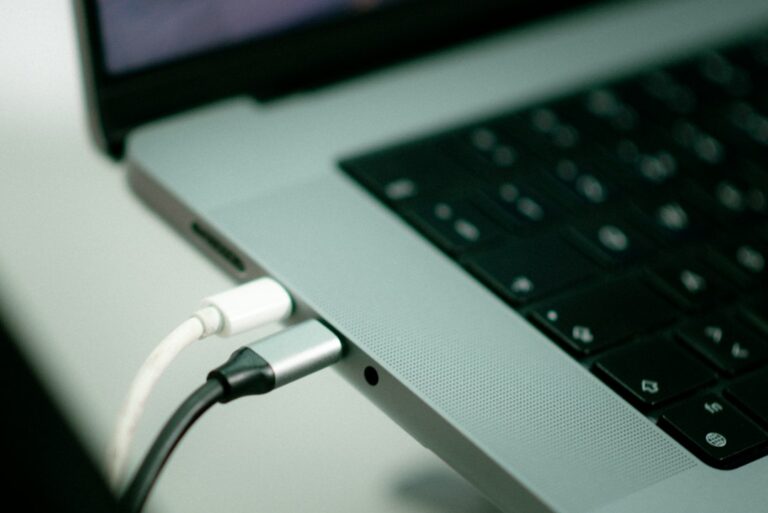
The path usually runs from the outlet to the charger, through a charging cable, into the hub, and then through the upstream connection to the laptop. Each component has a role. A large number printed on the charger does not establish how much power reaches the laptop through that chain.
Start by comparing the laptop maker’s recommended power supply with the hub’s documented power delivery to the computer. Some listings emphasize the maximum power accepted by the hub. If the output rating is missing, ask the manufacturer for it.
Test the original charger directly
Connect the laptop’s original or manufacturer-recommended charger directly, with the appropriate cable. Use the same workload and observe whether the charging warning or battery decline continues. If direct charging works normally but the hub path does not, you have narrowed the investigation.
Keep the comparison sensible. A nearly full battery may charge differently from a depleted one, and a heavy workload can leave less power available to charge the battery. A single percentage reading after a few minutes is not a reliable diagnosis.
| Observation | Next check |
|---|---|
| Direct charging works; hub charging struggles | Hub output, upstream cable, and attached peripherals |
| Problem starts when another device uses the charger | Charger’s multi-port power allocation table |
| Battery decreases only during demanding work | Available input versus the computer’s documented requirements |
| Charging pauses near full | Operating-system battery-management explanation |
Check shared charger behavior
Multi-port chargers can allocate power differently when several devices are attached. Read the table for the exact port combination, rather than adding together the largest numbers printed beside individual sockets. Test with the charger dedicated to the laptop path.
For illustration, a hub accepting a nominal 100W input might document a lower laptop output after reserving power. The exact difference is product-specific; do not subtract a universal number. This example describes how to read a specification, not a measured result for your equipment.
Do not confuse a charging cable with every USB-C cable
Use a cable explicitly rated for the required charging arrangement. A cable’s supported power does not, by itself, tell you its data or display capabilities. If the same upstream cable carries video and peripherals, it must also match those requirements. Apple distinguishes charging cables from other connection types in its Mac port documentation.
Replace damaged or unreliable cables rather than compensating with repeated reconnects. For a work-issued laptop, follow the organization’s approved charger and dock list when one exists.
Decide whether pass-through charging is worth keeping
If the hub’s documented output cannot meet your laptop’s needs under normal work, keep the original charger connected separately or choose a dock with an appropriate laptop-output rating. One extra cable can be a reasonable trade-off for stable charging.
Before buying a replacement, test the arrangement during a representative hour of work, including a video call and any external-drive activity you normally run. Record warning messages and the equipment model numbers if you need support.
Use the complete USB-C setup guide to evaluate the rest of the connection chain, and compare hubs and docks using the full cost of the required power supply.
A real example of input versus laptop output
Affiliate disclosure: As an Amazon Associate I earn from qualifying purchases. Some links below are affiliate links. See our affiliate disclosure.
Anker specifies up to 100W input and up to 85W laptop delivery for the Anker 555 USB-C Hub (A8383). Check availability on Amazon. This makes it a useful candidate only when its documented output suits your laptop and workload. It is not an upgrade for a computer that needs more power through the hub, and its charger is separate.
If direct charging already works, retaining that path may be cheaper than replacing the hub. For additional camera and audio devices, use the $200 starter plan to avoid adding unnecessary powered equipment.