Make a connection inventory before shopping
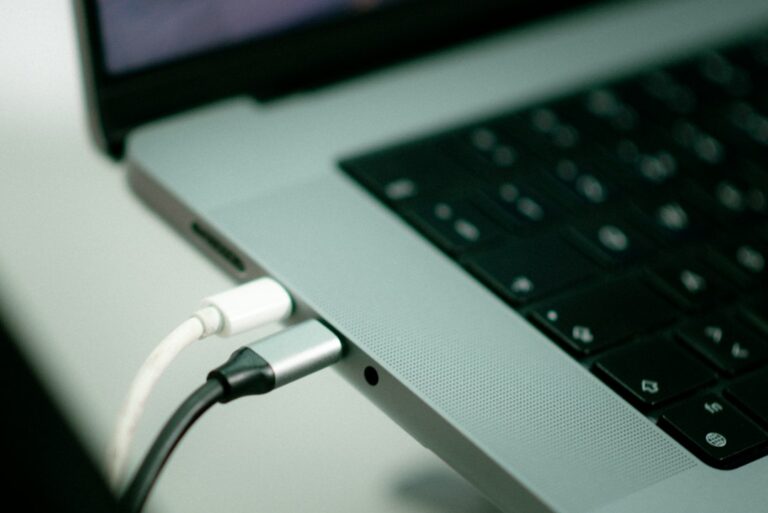
Write down your exact laptop model and year, operating system, monitor models, and the ports you already use. “MacBook Air” or “USB-C laptop” is not specific enough. Even similar-looking computers can have different external-display limits. Apple’s port identification guide illustrates why the connector shape alone is an incomplete specification.
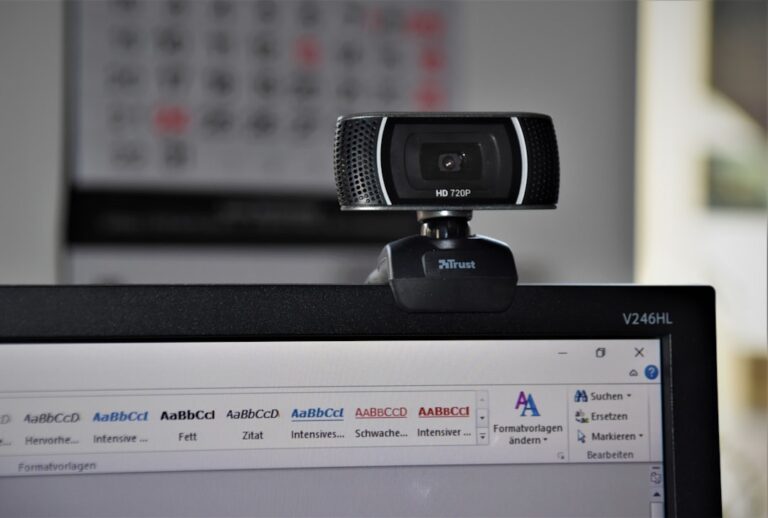
For each monitor, record the resolution and refresh rate you want to use together. Add your webcam, keyboard receiver, external drive, microphone, Ethernet connection, and charging requirement. Include devices you use simultaneously; a card reader you connect once a month matters differently from a backup drive that runs during every meeting.
| Question | What to record | Why it matters |
|---|---|---|
| What computer do you have? | Exact model and chip | Determines native display and port capabilities |
| What screens will run together? | Resolution, refresh rate, and inputs | A maximum for one screen may not apply to two |
| How does the laptop charge? | Manufacturer’s charger guidance | Dock output can differ from its input rating |
| Which devices move large files? | Drive and card-reader interfaces | Connected devices share upstream resources |
Choose the connection strategy
For a permanent desk, a powered dock can make arrival and departure easier. For travel or occasional use, a small hub may be sufficient. A monitor with a suitable USB-C input and built-in hub can also replace a separate dock for a simple setup. Compare the complete connection list rather than assuming the largest box is the most capable.
Consider a split arrangement if one-cable convenience adds substantial cost. You could connect the display directly, use the original charger, and reserve a small hub for low-bandwidth accessories. That leaves fewer requirements for any one device to satisfy. See our hub versus docking station guide for the trade-offs.
Check simultaneous capabilities, not individual labels
Before paying, look for a compatibility table or manual that describes your intended combination. “Two HDMI ports” does not establish that both show independent desktops on your computer. “4K” is incomplete without the refresh rate. “100W input” does not establish that the laptop receives 100W. If a USB-C monitor is not detected at all in Windows 11, use our USB-C monitor detection checklist before replacing the display.
Ask the seller one specific question: will this exact laptop run these exact displays at these settings while charging through this dock? Keep the answer and the product model number. If the documentation is unclear, do not solve the uncertainty by buying extra adapters.
Assemble and test in stages
- Connect one display directly and confirm that it works at the intended resolution and refresh rate.
- Add the dock with its supplied upstream cable and power supply.
- Connect the display through the dock, then add a second display if supported.
- Add storage and run a representative file copy.
- Add your camera and audio device, then make a normal video call.
- Test sleep, wake, restart, and reconnect behavior before the return period ends.
This sequence gives you a useful stopping point. If the display works directly but fails after the dock enters the chain, investigate the dock path rather than changing unrelated operating-system settings. If Windows does not detect the display at all, use our USB-C monitor detection guide for Windows 11.
Spend on the bottleneck
A more expensive dock cannot create native display support your laptop lacks. A faster SSD will not fix a charging-only cable, and a new router will not improve a faulty local adapter. Use the MacBook display checklist, SSD troubleshooting guide, and video-call diagnostic to isolate the actual constraint.
The best finished setup is the one that passes your daily-work test reliably. Keep a short note of the working cable, dock firmware, and display settings so you can restore the arrangement after replacing a component.
A compact option for one display
Affiliate disclosure: As an Amazon Associate I earn from qualifying purchases. Some links below are affiliate links. See our affiliate disclosure.
The Anker 555 USB-C Hub (A8383) is a candidate when your inventory calls for one HDMI display, wired networking and everyday USB peripherals. Check availability on Amazon. Check Anker’s exact host and display requirements first. Its single HDMI output does not turn it into a two-monitor dock, and it cannot add native display support to a laptop.
Keep a working direct connection if the hub solves only cable clutter. For a desk that also hosts a stream, use the $300 facecam plan or $1,000 console-and-recording plan to count the additional devices before buying the adapter.